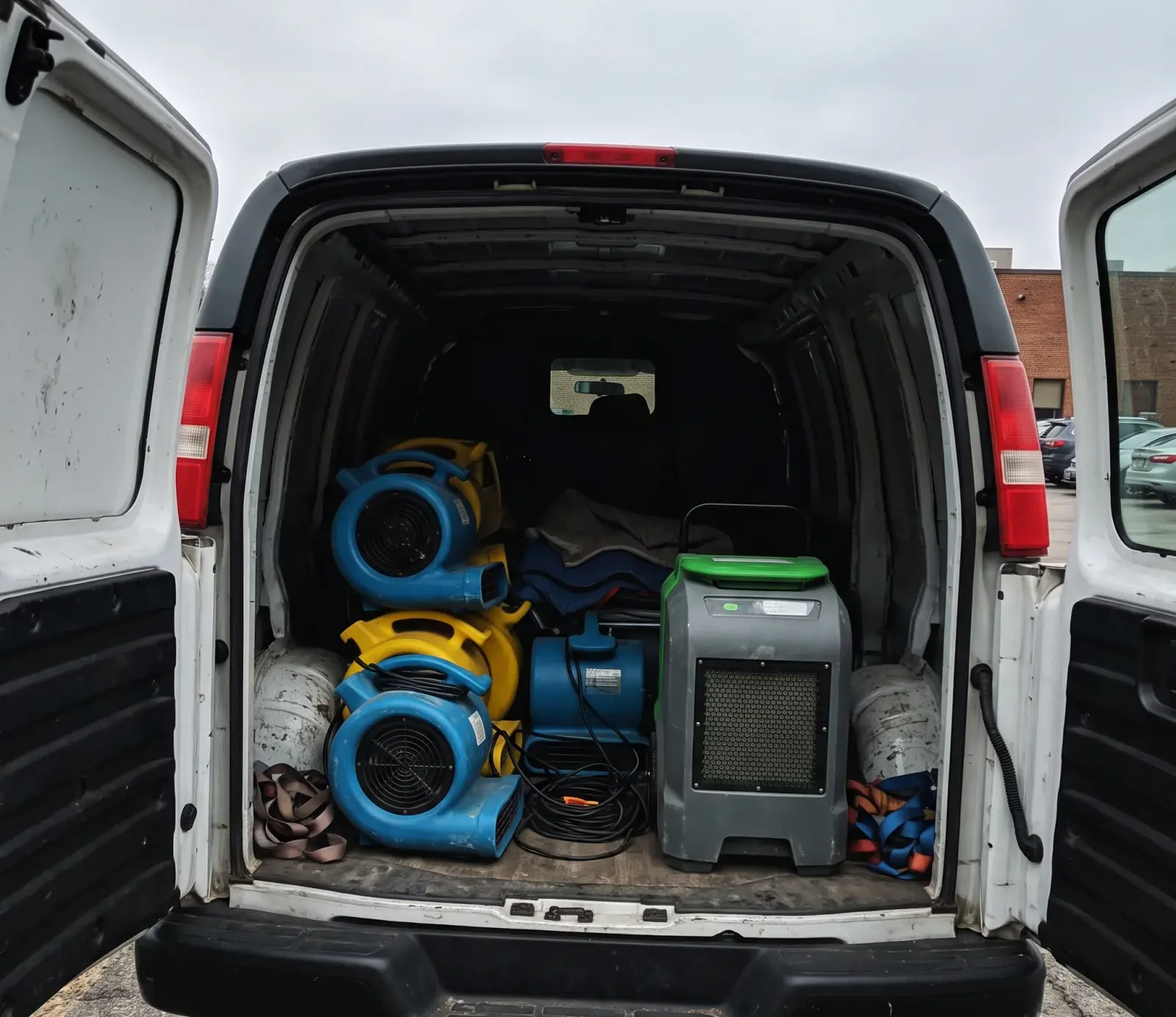
How Wet Materials Affect Next Steps
Carmel’s seasonally high water table can push groundwater into a basement, where a homeowner may find more than a small surface spill. A shop vac can lift visible pooling, but seepage or damp materials may call for professional water removal and a closer moisture assessment.
White River and Cool Creek are local water features, while the Design District and Carmel City Center help orient readers to Carmel. Their presence does not show whether water reached a particular home; the indoor source, route, and affected materials determine whether household removal is enough.
Emergency Water Extraction inquiries come from across Carmel and Hamilton, where nearby service boundaries may not follow the address a caller expects. Share the property’s street address so the pros we connect you with can check whether they serve that location.
Handling Potentially Contaminated Water
- DIY LIMITS
- A contained, clean spill on a safe hard floor may be collected with towels or a household wet vacuum.
- MATERIALS
- Carpet, trim, and other materials can hold water beyond the reach of a household collection tool.
- EQUIPMENT
- Pumps move pooled water; wet vacuums collect reachable liquid. Neither function confirms materials are dry.
- SAFETY
- Wet electrical equipment or possible sewage and chemical contamination calls for keeping clear and seeking qualified guidance.
- WHEN TO CALL
- A household wet vacuum can handle a limited spill on a sealed surface; spreading water or soaked materials are reasons to seek advice from the pros we connect you with.
- EQUIPMENT USED
- Carmel identifies seasonally high water tables as one contributor to basement intrusion. Weather can change when water appears, but the season alone does not show its source or indoor path; assess the actual affected areas and materials.
- EQUIPMENT
- an estimated $250–$1,300
What Standing Water Removal Covers
Shop vac water removal collects reachable liquid in a tank. Tank capacity limits how much water a shop vac can collect before it needs to be emptied. Compare the written scope and the equipment’s stated job. A pump moves pooled water; a wet vacuum collects reachable liquid. Moisture checks assess damp materials, and drying equipment addresses remaining moisture. Ask which of these are included rather than relying on a general service label.
Choosing Tools for the Conditions
The licensed pros we connect you with can explain which belongings or floor coverings need to be moved to reach affected areas. They then select an extraction method, such as a pump for pooled water or a wet vacuum for accessible liquid, and remove standing water from the agreed areas.
The pros we connect you with establish which rooms have pooled water and how far the affected area extends, then select extraction equipment for the site conditions. They remove standing water and document the work scope. If a supply leak or drain problem caused the intrusion, that source needs separate repair; extraction alone will not prevent another release.
A one-visit job is plausible when all pooled water is reachable and no damp materials need attention afterward. If checks reveal moisture in floors or walls, a longer drying plan may follow. Ask the pros we connect you with to describe the removal boundary and next steps in writing.
VISIBLE WATER AND MATERIAL MOISTURE REQUIRE DIFFERENT CHECKS
| Intrusion Source |
Pump Access |
|---|
| Basement water awaiting pump-out | Pump or vacuum use |
| A second pool forms after removal | Water condition |
| Water reaching rooms on separate sides | Pooled water extracted; dampness assessed |
INSURER CONTACTTreat water removal and repairs as separate decisions when reviewing the work plan. Ask the provider to describe the extraction scope and list it separately from other work on the invoice. Carmel Engineering guidance on private drains concerns city-code conditions and plan review; it is not an extraction license requirement.
Dampness Across Building Materials
Water left beyond the surface can keep flooring, carpet backing, or nearby materials damp. If assessment is delayed, the affected area may be harder to define and further drying may be needed. Water can move into gaps at floor edges that are not visible from above.
Keep Foot Traffic to Dry Areas
From a dry, clear location, the owner can note where water first appeared, whether more is arriving, and which rooms or belongings are affected. Do not touch outlets, cords, or appliances where water is present. If water reaches installed flooring, walls, or cabinetry, stop household collection and contact the pros we connect you with.
Deciding When an Area Is Unsafe
Water extraction should wait if the affected area may have structural damage. A soft, sagging, or shifting floor is a reason to keep household members out and have the space assessed before cleanup begins. A calm-looking surface does not prove it can safely support weight; the condition beneath it may not be visible.
See How Pumps Lift Water From Floors
The condition of affected materials can help determine how they should be handled.In Carmel, this scope guide covers removing pooled water from affected rooms; moisture checks and drying, leak repair, sewage cleanup, mold remediation, and rebuilding fall outside that work. Those added tasks change the estimate. Ask the pros we connect you with to state any visit charge and list the extraction work in a written estimate before scheduling.For a fuller view of the variables and ranges, open the pricing guide.