Emergency Water Extraction Warning Signs in Carmel
After a wet day in Carmel, a homeowner may find a puddle where the floor meets a wall, soaked belongings, or damp trim beyond the visible water. Note the room and the wet area from a dry place. A recognizable reference such as Historic Village, Fall Creek, or Broad Ripple Park can help describe the address, but it says nothing about that property's flood exposure. A crack in the foundation can let water enter even when the floor surface looks mostly dry.
A homeowner may find a wet floor without knowing what lies below it. This page explains the first task—removing standing water—and what questions come next. Water removal addresses the pooled water, while the source of a leak may need separate attention.
On the day water reached a Carmel floor, the first question is whether anyone can inspect the room without stepping into danger. Water can travel beneath flooring and reach rooms beyond the first visible wet area. A bowed ceiling is another reason to stay out until its condition is assessed. Water removal does not locate or repair a leak, and damp materials may remain afterward. Wet insulation can lose its ability to slow heat moving through a wall.
Signs of water intrusion needing urgent removal
Call for qualified help when water keeps moving, reaches electrical equipment, or could wet additional materials before the area can be addressed.
| What appears | What it could mean | When to respond | More Context |
|---|---|---|---|
| Standing Water on Indoor Floors The water may form a broad, thin sheen across a room or several deeper patches with uneven edges around table or cabinet feet. Reflections can make the surface hard to see in dim light. It may look clear or cloudy; tile, concrete, or carpet borders may appear darker where wet. | When water is pooled inside a Carmel home, it has moved beyond a damp spot and can spread under floor coverings or into floor joints. Emergency extraction removes the visible water, but does not establish that the floor assembly is dry. Moisture can also stain nearby trim or drywall, even after the pooled water is removed. | Water left into the evening can keep floor edges and nearby materials wet, letting moisture reach beyond the visible patch before extraction begins. In Carmel, whether a home is nearer Fall Creek, Marott Woods Nature Preserve, or Fashion Mall, visible pooling merits prompt attention. | Ask on the call |
| Water Spreading Into Adjacent Rooms Across a floor, the water may appear as a broken, glossy trace, a darkened patch on carpet, or small pools gathered along a threshold. The edge can be jagged rather than straight. Lower walls may feel cool or damp near the floor; paint or trim may look darker. In a Carmel home, check the floor on both sides of an interior doorway. | Water reaching a second room shows that the wet area extends beyond the room where it first appeared. For a Carmel homeowner, that changes what needs to be checked: note each room touched by water and whether it is still moving, then ask the pros we connect you with to assess extraction. The same clue applies to homes in the Nora–Carmel Edge. | While water remains active, it can extend across flooring and into another room during the same incident. In Carmel, a homeowner near Indianapolis or North Indianapolis should treat new spread as a reason to arrange an assessment promptly; moisture can remain in materials after visible water stops moving. | Ask on the call |
| Water Pooling in Multiple Rooms The floor shows distinct patches of water in rooms apart from one another. Some may be thin, reflective films; others may have visible edges and enough depth to ripple when disturbed. The water can look clear, cloudy, or discolored. Nearby flooring may appear darker or feel damp at its edge. | When water stands in separate rooms, the intrusion has reached multiple areas, though the pattern cannot identify its route or source. In Carmel, homes near the Arts & Design District, Monon Greenway, or Carmel City Center still need an address-specific assessment. Include every room with standing water in the assessment by the licensed pros we connect you with. | As hours pass, pooled water can keep flooring and nearby materials wet; visible removal does not establish that they are dry. Keep track of whether water returns after it has been removed. | Ask on the call |
| Indoor Drips Collecting on Floors On a pale hard floor, separate clear drops make dark-edged round spots; where they touch, the marks form an uneven shallow patch with a reflective surface. On carpet, the pile looks darker and lies flatter where drops land. The wet area may sit beneath a ceiling seam or beside a wall, with individual beads visible around its edge. | On Monday morning, a Carmel homeowner finds fresh drops collecting on a basement floor. Repeated wetting means water is still reaching the room; a dry patch between drops does not show that the source has stopped. If water is pooling, contact the pros we connect you with for prompt removal. Fall Creek and Geist Reservoir do not identify the source at a particular address. Extraction removes pooled water; leftover dampness may need separate assessment and drying. | Fresh drops can keep adding water while the owner waits, expanding the wet area over the next few hours and allowing moisture to move under floor coverings. In a Carmel home, visible puddle removal alone cannot establish that materials are dry. | Basement Water Extraction |
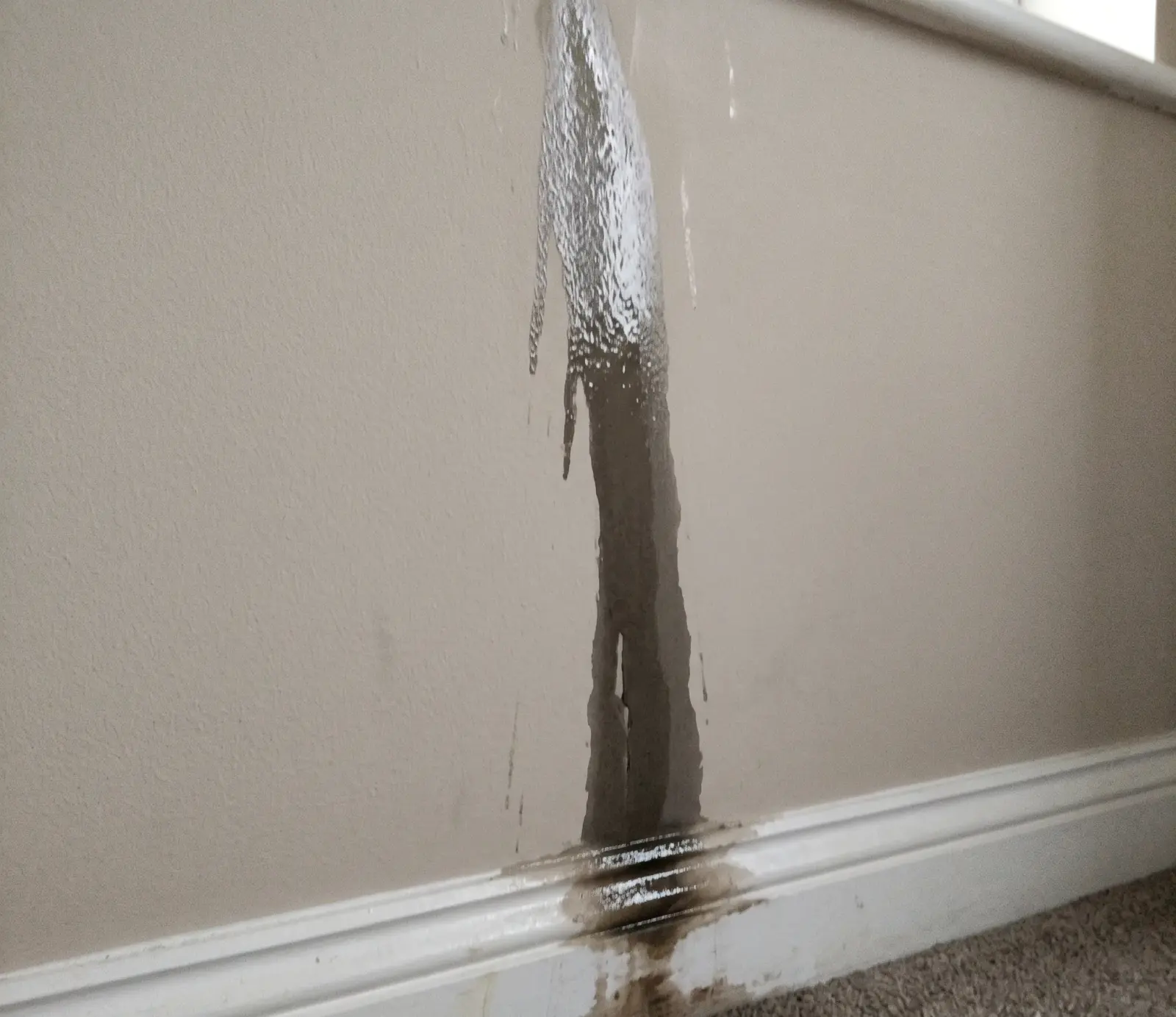
| Water Running Down Interior Walls The drywall may feel soft or sag slightly as moisture weakens the material behind the painted surface. Their edges can feather into a broad stain; small droplets gather at the bottom seam above the baseboard. The paint may ripple or form tiny raised blisters beneath the marks. | When a Carmel homeowner sees water travel down a wall, gravity carries it toward the base, where it can join water on the floor. A wet patch below the track may therefore be part of the same intrusion. The pros we connect you with can remove pooled water; extraction alone does not establish that wall or floor materials are dry. | If the flow continues, water can keep reaching the floor and enlarge the wet area. At a Carmel home near Carmel City Center or the Monon Greenway, prompt attention limits how long water sits; after removal, moisture may still remain in building materials and require assessment and drying. | Ask on the call |
| Water Seeping From Wall-Floor Joints In Carmel, this sign appears at the bottom of a wall, where it meets the floor: a narrow wet edge, separate droplets, or a small stream tracing the seam. The concrete or finish may look darker than the surrounding surface. Nearby flooring can feel slick or damp, and the joint may leave a wet mark when touched. | When water actively emerges at the joint between a basement wall and floor, water collecting there may need extraction. The seam alone does not identify the source. For an address in Carmel or the Nora–Carmel Edge, proximity to White River or Cool Creek cannot answer that question. Report continued seepage to the pros we connect you with so they can assess the water that needs removal. | If the flow continues, water can spread across the floor and beneath nearby coverings within hours, wetting more material than the seam shows. In Carmel, neither White River nor Cool Creek indicates what is happening at a particular home; ongoing seepage calls for prompt water removal. | Basement Water Extraction |
| Sagging or Bulging Ceiling In a Carmel home, the ceiling may slope below its usual level or form a rounded outward swell. The surface can look rippled, with a faint yellow or brown area, a darker edge, or a visible line along a seam. Paint or drywall may appear softened or feel less firm than the surrounding surface, including near Midtown Plaza. | In Carmel, a ceiling bulge can be the first visible clue that water has entered the ceiling cavity; its source may remain hidden and keep feeding the intrusion. As water soaks the ceiling material, it can soften and weaken the surface around the bulge. The pros we connect you with can assess extraction needs; the source requires separate repair. | As water remains overhead, a bowed area can deepen and may release material suddenly, leaving debris and water below; continued leakage can worsen the damage over a short period. Moisture can spread through ceiling materials, affecting areas beyond the spot where the leak first appeared. | Ask on the call |
Signs worth arranging an assessment for
The pool is gone, though moisture may remain within building materials and need assessment.
| What appears | What it could mean | When to respond | More Context |
|---|---|---|---|
| Wet or Swollen Baseboards The lower trim may sit at an angle, bulge toward the room, or show a wavy top edge. Its finish can look darker or blistered, and the bottom may feel soft or damp. A thin line may open between the trim and wall, with the change limited to a short section or continuing along the floor. | After a rainy day in Carmel, a homeowner may notice damp or misshapen trim before seeing water elsewhere. The change calls for checking the floor edge and nearby rooms. If water has collected on the floor, ask the pros we connect you with to assess extraction; removing visible water would not establish that the wall or floor is dry. | If dampness remains, the trim and adjoining wall can stay wet and change further over the next hours or days. In Carmel, even a room near Asa Bales Park or Quaker Park needs attention based on its own conditions; nearby landmarks do not establish a home's exposure. | Ask on the call |
| Softened Drywall Near the Floor Along a lower wall near the Monon Greenway, the drywall may feel yielding under light fingertip pressure instead of rigid. Its face can look slightly darker, swollen, or rippled, with a blurred boundary against the firmer area above. The softness may follow the baseboard line or appear in a small isolated patch. | After water appears in a Carmel home, a soft lower wall suggests the drywall has absorbed moisture and lost strength. Dampness may continue behind the surface or beyond the spot that feels soft, so touch alone cannot show its reach. The pros we connect you with can remove standing water; a moisture check can help identify materials that need drying. | As dampness persists over the next few days, the drywall can lose more strength and its surface may become easier to damage. A musty odor can linger in the room even after the surface feels dry. | Ask on the call |
Signs to keep an eye on
A musty odor may persist after visible water is gone, even if surfaces seem dry.
| What appears | What it could mean | When to respond | More Context |
|---|---|---|---|
| Bubbling or Peeling Wall Paint The finish forms raised, rounded blisters or broad ripples, or separates into thin flakes with curled edges. The patch may look glossy beside dull, rough areas, with a color shift at its border. It can appear low on a wall, near a corner, or higher up; a lifted edge may feel loose or papery. | When a homeowner in Carmel notices paint lifting after water has entered the home, the finish is a reason to check the area, not proof that water is still pooled there. Look for visible water or other wet materials nearby. Moisture may also remain in the wall behind the lifted paint, even when no water is visible on the surface. | If lifting appeared after water intrusion, a check can establish whether water remains and whether materials need further drying. Left alone, loose paint may keep separating over the following days. As the paint continues to separate, flakes may fall away and expose more of the underlying wall. | Ask on the call |
Extraction FAQs
What does standing Water on indoor floors mean?
When water is pooled inside a Carmel home, it has moved beyond a damp spot and can spread under floor coverings or into floor joints. Emergency extraction removes the visible water, but does not establish that the floor assembly is dry. Moisture can also stain nearby trim or drywall, even after the pooled water is removed.
What does water spreading into adjacent rooms mean?
Water reaching a second room shows that the wet area extends beyond the room where it first appeared. For a Carmel homeowner, that changes what needs to be checked: note each room touched by water and whether it is still moving, then ask the pros we connect you with to assess extraction. The same clue applies to homes in the Nora–Carmel Edge.
What does water pooling in multiple rooms mean?
When water stands in separate rooms, the intrusion has reached multiple areas, though the pattern cannot identify its route or source. In Carmel, homes near the Arts & Design District, Monon Greenway, or Carmel City Center still need an address-specific assessment. Include every room with standing water in the assessment by the licensed pros we connect you with.
What does indoor drips collecting on floors mean?
On Monday morning, a Carmel homeowner finds fresh drops collecting on a basement floor. Repeated wetting means water is still reaching the room; a dry patch between drops does not show that the source has stopped. If water is pooling, contact the pros we connect you with for prompt removal. Fall Creek and Geist Reservoir do not identify the source at a particular address. Extraction removes pooled water; leftover dampness may need separate assessment and drying.
What does water running down interior walls mean?
When a Carmel homeowner sees water travel down a wall, gravity carries it toward the base, where it can join water on the floor. A wet patch below the track may therefore be part of the same intrusion. The pros we connect you with can remove pooled water; extraction alone does not establish that wall or floor materials are dry.
What does water seeping from wall-Floor joints mean?
When water actively emerges at the joint between a basement wall and floor, water collecting there may need extraction. The seam alone does not identify the source. For an address in Carmel or the Nora–Carmel Edge, proximity to White River or Cool Creek cannot answer that question. Report continued seepage to the pros we connect you with so they can assess the water that needs removal.
What does wet or swollen baseboards mean?
After a rainy day in Carmel, a homeowner may notice damp or misshapen trim before seeing water elsewhere. The change calls for checking the floor edge and nearby rooms. If water has collected on the floor, ask the pros we connect you with to assess extraction; removing visible water would not establish that the wall or floor is dry.
What does softened drywall near the floor mean?
After water appears in a Carmel home, a soft lower wall suggests the drywall has absorbed moisture and lost strength. Dampness may continue behind the surface or beyond the spot that feels soft, so touch alone cannot show its reach. The pros we connect you with can remove standing water; a moisture check can help identify materials that need drying.
What does bubbling or peeling wall paint mean?
When a homeowner in Carmel notices paint lifting after water has entered the home, the finish is a reason to check the area, not proof that water is still pooled there. Look for visible water or other wet materials nearby. Moisture may also remain in the wall behind the lifted paint, even when no water is visible on the surface.
What does sagging or bulging ceiling mean?
In Carmel, a ceiling bulge can be the first visible clue that water has entered the ceiling cavity; its source may remain hidden and keep feeding the intrusion. As water soaks the ceiling material, it can soften and weaken the surface around the bulge. The pros we connect you with can assess extraction needs; the source requires separate repair.
Choose a Next Step for Water Signs
A wet carpet edge, water along a basement floor, or a damp patch by an appliance gives a Carmel homeowner a place to start describing the problem. Note the affected rooms and materials from a safe spot, and share any clues about the intrusion. Ask the pros we connect you with about availability, timing, and a visit charge. Request an estimate that identifies extraction and any proposed follow-up, such as checking materials or using drying equipment.
Call (317) 799-9832